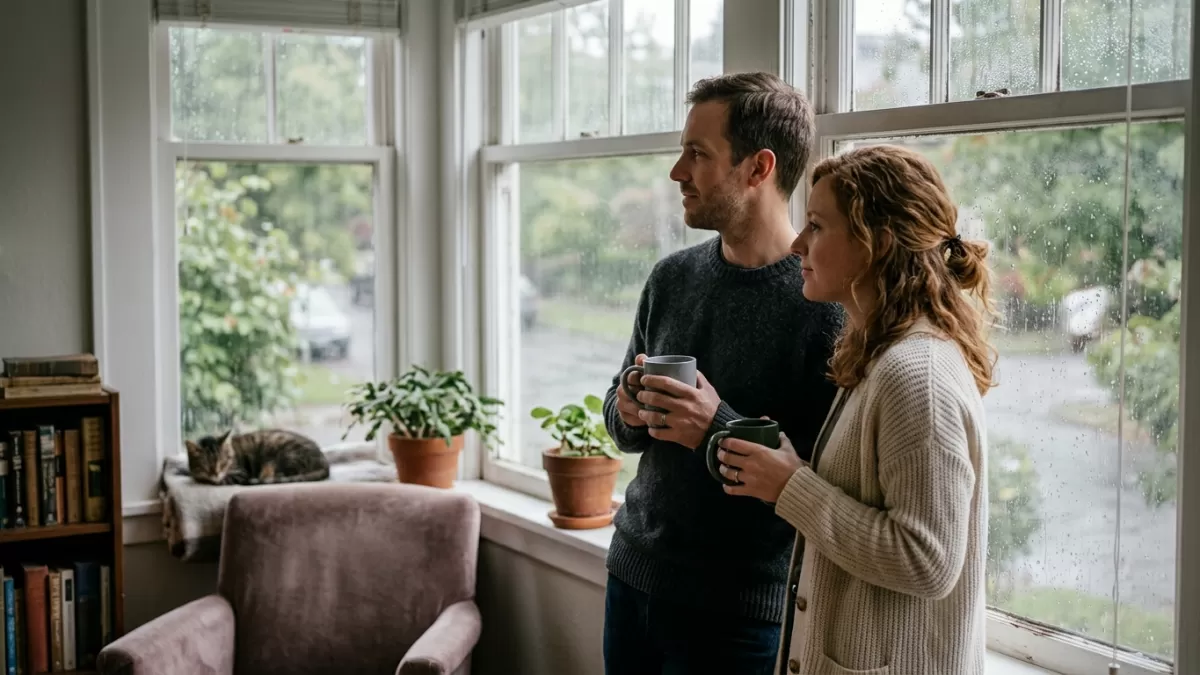
There’s a certain quiet that settles into the kitchen late at night after a hard day, when the dishwasher hums and shoes sit by the door. Emotional peace shared life brings isn’t about perfect days or the absence of stress. It comes in the way you and your partner know, without speaking, how to move around each other in the small spaces. On the surface, you may be managing a health scare, a stack of unpaid bills, or a family argument simmering in the background. Yet, beneath these pressures, there’s a steady undercurrent: the peace in long-term relationships that you’ve built together, one unremarkable Tuesday at a time.
This isn’t glossy or dramatic. These days, it’s a deep breath before a difficult phone call, or the comfort of sitting together in silence after an argument with a sibling. It’s the emotional peace from togetherness that shows up in how you share the weight. Life is rarely easy or fair, but over the years, your partnership becomes a place where challenges are faced with a little more calm, a little less panic. That’s the gift of long-term relationship peace—it’s not magic, but it is real, and it changes everything about how you weather the hard parts.
What Emotional Peace Shared Life Really Looks Like
One of the most overlooked truths about shared life emotional stability is that it doesn’t mean nothing ever rattles you. Instead, it’s the ability to return—again and again—to a sense of safety and reliability in your partnership, even when the outside world is chaotic. Peace through partnership isn’t the absence of raised voices or tough nights. It’s the growing sense, over years, that you can face what comes because you’re not facing it alone.
It shows up in the way you and your partner handle an unexpected bill or sudden work stress. Maybe there’s a tense conversation over dinner, but then you both end up folding laundry together, and the act itself is soothing. There’s a rhythm to your shared life that makes space for both worry and reassurance. The small, repeated acts—remembering who likes what for breakfast, noticing when the other is tired—become a quiet scaffolding for emotional peace shared life can offer.
Many couples expect that peace in long-term relationships will mean never fighting or never being upset. But the reality is softer and more forgiving. It’s knowing that you can have a rough day, or even a rough week, and still reach for each other at the end of it. That’s the kind of peace that grows with time, trust, and a lot of lived-in moments.
Why Facing Stress Feels Different Together
Couples therapists often find that the most profound trust is built during mundane logistical tasks, not grand gestures. The tricky part is, most people think emotional peace from togetherness means big, sweeping comfort. In practice, it’s more likely to show up in the way you both manage a late-night pharmacy run or a budget spreadsheet. Shared life emotional stability is made of these small moments—where you see your partner’s worry and offer a wordless cup of tea, or sit together with a problem instead of rushing to fix it.
The peace in long-term relationships doesn’t erase outside problems, but it does soften the impact. There’s a buffer: the knowledge that whatever happens, you have a team. One person might handle the difficult phone call while the other cooks dinner. Or maybe it’s the way you tag-team childcare during a family emergency, each picking up where the other leaves off. It’s a dance that only comes from years of practice and small failures.
This is why, when a real crisis hits—an illness, a job loss, a family complication—you often find a strange steadiness together. You know each other’s strengths and blind spots. You can lean in, or step back, as needed. The emotional peace shared life gives isn’t loud or obvious, but it’s sturdy enough to hold both of you up, even when everything else feels shaky.
How to Tell If You’re Living in the Resource of Shared Peace
- During a tough conversation, you both pause before reacting, trusting the other’s intentions even when you disagree.
- One of you feels overwhelmed by a problem, and the other quietly takes on an extra chore without fanfare.
- Your home feels like a place where it’s okay to admit fear or frustration, without worrying that it will break the relationship.
- There are inside jokes or shorthand phrases that help you both reset after tension.
- When an outside stressor appears, you instinctively check in with each other before making big decisions.
- You find comfort in everyday routines—like making coffee or walking the dog together—even during stressful times.
More couples than you’d think live with this kind of long-term relationship peace, but it’s rarely talked about out loud. This isn’t about perfection, but about the quiet strength that grows from facing life side by side, day after day. It’s usually invisible to outsiders, but unmistakable when you’re living it.
Take the moment when one partner gets off a stressful work call and just sits on the couch, head in hands. Instead of rushing in with solutions, the other sits nearby, wordless, offering presence. It’s not dramatic, but in that small act, there’s a deep sense of shared life emotional stability—a knowing that whatever comes, you’ll face it together.
Everyday Habits That Strengthen Emotional Peace Shared Life
- Check in with each other daily, even briefly—"How are you feeling about today?"
- Share small responsibilities without keeping score.
- Offer or ask for comfort in moments of stress, even if it’s just a touch or a few words.
- Build tiny rituals—like a shared cup of tea before bed—that act as an anchor during chaotic times.
- Let each other have space when needed, without withdrawing emotionally.
Checking in daily is usually the most important because it acknowledges both of you are carrying invisible loads. The mistake many couples make is waiting for a crisis to connect, instead of weaving small moments of care into the fabric of everyday life. You don’t have to solve every problem—just noticing and naming it can be enough.
Think about those evenings when you both come home worn out. You might not have the energy for a deep talk, but a simple, “Rough day?” and a gentle squeeze of the hand can say more than a long conversation. Over time, this kind of micro-connection builds trust and emotional peace from togetherness, making it easier to face whatever is thrown your way.
If this feels like too much today, remember—long-term relationship peace is built slowly. Some days you’ll miss the mark, or feel disconnected. That’s normal. It’s the returning, again and again, that matters most.
Small Anchors for Overwhelming Days
On days when everything feels heavy, it helps to have a small, reliable action you can take together. These aren’t fixes, but gentle reminders that you’re in this as a team. Here are a few ideas to try:
- When you both get home, spend 30 seconds sitting together in silence before turning to chores or screens.
- After dinner, each share one small thing you appreciated about the other that day, even if it’s just “Thanks for picking up milk.”
- Pick one night a week to go to bed at the same time, even if it’s just to read side by side for 10 minutes.
- If a stressful topic comes up, agree to take a short walk together before discussing it further.
How Shared Peace Feels When Life Gets Messy
It’s 8:45 PM in a small apartment. The living room is dim, the glow of a laptop screen fighting with the soft light over the kitchen counter. There’s a letter from the hospital on the table, unopened, and the weight of what it might say hangs between you. The air is thick with worry, but neither of you is alone in it.
One of you stands at the sink, washing dishes that seemed to multiply all day. The other leans in the doorway, arms crossed, quiet but present. There’s no rush to speak, no demand to "fix it now." Instead, there’s a gentle rhythm—a familiar song of small gestures. You take turns reading the letter aloud, pausing whenever the words catch in your throat. When it gets too much, you both step out onto the balcony for a few minutes of cool air, side by side. You don’t have answers, but you have each other.
This is where emotional peace shared life lives: in the way you face external storms as a unit, drawing on the years you’ve spent building trust and understanding. Even when outcomes are uncertain, the partnership itself is the resource you lean on.
When the Resource Feels Out of Reach
Sometimes, even in the most settled long-term relationships, emotional peace from togetherness can feel distant—especially if stress keeps piling up or old wounds resurface. If you find yourselves stuck in repeated arguments, feeling more alone than connected, or unable to regain your usual sense of shared life emotional stability, it’s a good time to reach out. Speaking to a couples counsellor or a trusted friend can bring a fresh perspective and offer support while you find your way back to each other.
Even the strongest partnerships need help sometimes. It’s a sign of care, not failure, to seek it when the peace you’ve built feels shaky.
Common Questions
Long-term relationship peace isn’t always obvious in the day-to-day, so it’s natural to have questions about what it provides and how to care for it. Let’s walk through some common worries and realities—each answer includes a practical, real-life moment you might recognize.
What is the specific resource that the peace of a long shared life provides?
The main resource is a sturdy sense of “us”—the quiet knowing that you’re not alone in facing tough times. This shows up as a steadying effect when things get rocky outside the relationship. For example, when a scary medical diagnosis arrives, you might notice that you both instinctively lean together, dividing tasks and checking in on each other. The resource is less about fixing problems and more about having a soft place to land, together, when the world feels hard.
How does relational peace differ from relational flatness?
Relational peace means you feel settled and secure, but still emotionally connected and responsive to each other. Flatness, on the other hand, feels like going through the motions without real warmth or care. For instance, peaceful couples might still have gentle arguments or share laughter, even on hard days, while couples in a flat phase may feel like roommates just managing logistics. The difference is in the sense of aliveness and mutual comfort, even in routine.
How do we protect and invest in the resource of long-term peace?
Protecting long-term relationship peace means tending to small, daily habits that build trust—like checking in, offering comfort, and making space for each other’s feelings. It also means repairing quickly after conflict, not letting resentment pile up. For example, after a stressful argument about money, taking time to reconnect with a quiet dinner or a shared TV show signals that the relationship is still safe. Small, repeated gestures matter more than grand fixes.
What happens to shared peace when a genuinely threatening difficulty arrives?
During a real crisis—an illness, job loss, or family emergency—the peace in long-term relationships can be tested. Still, the resource you’ve built helps you move through fear or grief as a team, rather than alone. For example, when bad news comes in, you might take turns comforting each other, or one cooks while the other makes difficult phone calls. The peace doesn’t erase pain, but it gives you a foundation to face it together, moment by moment.
Can the peace of a long shared life make each person more capable in the world outside the relationship?
Yes, the emotional peace shared life offers can make you braver and more resilient outside the relationship. When you know you have a supportive partner at home, you’re more likely to take healthy risks or face challenges with confidence. For instance, someone who feels secure at home might step up for a tough project at work or face a difficult family member, knowing they have backup and understanding waiting for them. The strength built together expands outward.