After a long workday, the two of you finally make it to a crowded living room, arms full of dishes and gifts. Staying connected during family gatherings isn’t exactly top of mind as you’re pulled into separate conversations, handed babies to hold, and asked about work, the house, or the latest news. Still, somewhere in the noise—maybe across the table or just as you pass in the hallway—there’s a quiet, familiar look. You both know it means, “We’re in this together, even now.”
Family gatherings can be a whirl of chatter and clinking plates, and the pressure to perform—smile, answer, help, smooth things over—can feel relentless. For couples, these moments test the small threads that hold you together. It’s ordinary to get swept up, to lose track of your partner, or to forget the private language you share. That said, these are the moments when a couple connection at family events matters most.
The Unspoken Channel That Holds You Together
Most couples don’t talk about staying connected during family gatherings until after the fact—when one partner feels left behind, or both come home feeling like strangers. The truth is, there’s usually a private channel running quietly in the background. A gentle squeeze under the table. That half-second of eye contact when the room is full of stories you’ve both heard a dozen times before. Even a tiny inside joke shared in a whisper as the night drags on.
This isn’t about shutting others out or creating distance. It’s about making sure your relationship remains the anchor, even when the tide of family and relationship stress rolls in. In the swirl of family dynamics—siblings bickering, parents hinting at old arguments, kids bouncing off walls—it’s that shared signal that reminds you both: we matter here, too.
Sometimes, it’s as simple as agreeing on a subtle sign before you walk in the door. Other times, it’s a shared look that says, “Let’s check in later.” Protecting your couple bond at family events isn’t about grand moves. It’s about the tiny gestures that ground you.
Why This Feels Harder Than It Looks
Couples therapists often find that the most lasting connection happens through small, repeated gestures—not dramatic declarations. The tricky part is, family gatherings are designed to scatter your attention. You’re pulled toward parents, siblings, cousins, kids, and sometimes even pets, all at the same time. It’s easy to lose track of each other without realizing it.
Many people expect their partner to “just know” when they need support, or to always prioritize one another, even when surrounded by family. But in reality, social pressure, divided loyalties, and old patterns can cloud those instincts. Protecting your couple bond during family gatherings means consciously choosing to reach for each other, even in small ways.
It’s normal to feel a little silly or self-conscious about your private signals at first. But over time, these gestures become a language only you share—one that can quietly protect your connection from being drowned out by family noise.
Signs You Might Be Losing Your Connection at Family Events
- You notice you barely spoke to your partner all evening, except about logistics or to pass the salt.
- One or both of you feel emotionally distant or irritable on the drive home, unsure why.
- You catch yourself feeling alone, even with your partner just across the room.
- Small misunderstandings from the gathering linger into the next day or start unnecessary arguments.
- During the event, you crave a moment of real togetherness—but can’t seem to find it.
- You or your partner avoid family gatherings more often, not always knowing why.
More couples experience this than admit it out loud. The pressure, the divided attention, the sense of obligation—these can all quietly chip away at even the closest bonds. If you recognize yourself here, you’re far from alone.
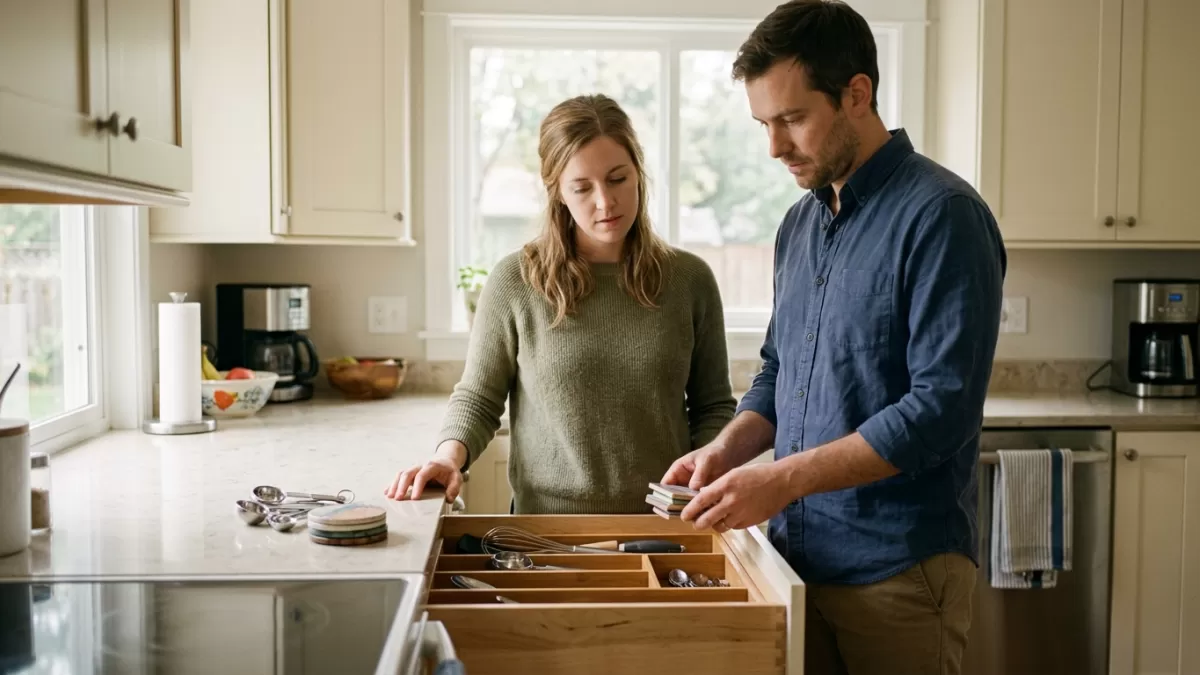
Picture a late-night kitchen clean-up after everyone else has gone to bed. One partner, drained and quiet, is still carrying a comment from earlier. The other, sensing the mood, doesn’t push. In that silent moment, a hand on the back or a quick squeeze can say, “I saw you tonight. I still see you.”
Steps to Quietly Guard Your Connection at Family Gatherings
- Agree on a private signal ahead of time—maybe a squeeze, a phrase, or a look—that means “Check in with me.”
- Take two minutes together in a hallway, on the porch, or even in the bathroom, just to ask, “You okay?”
- Debrief after the event, sharing one thing you appreciated and one thing that felt hard.
- Support each other’s boundaries with family—if one of you needs a break, respect that without judgment.
- Keep physical connection alive, even subtly—a hand on the knee, fingers brushing as you pass.
The most important step is agreeing on your private signal before you walk through the door. Many couples skip this, either because it feels awkward or because they assume they’ll just “know.” But in practice, it’s easy to miss each other’s signs when the room is full and the pressure is high. Take a moment before the event to agree on what your signal will be, and talk briefly about how you’ll both use it.
For example, at a backyard barbecue, one couple quietly agreed that squeezing each other’s hand twice meant, “I need to check in.” Later, when one partner felt overwhelmed, that signal was enough to step aside, regroup, and return feeling supported—not stranded.
It’s also normal for one partner to find this all a bit much, especially if you’re tired or just trying to get through the evening. Don’t force connection if you’re drained. Some nights, the best you can do is a quick look and a promise to talk later. That still counts.
Start Small: Micro-Moments of Connection
Even on your busiest days, a little intention goes a long way. Here are a few gentle ways to begin, without extra effort or fuss:
- Before arriving, agree on a signal—something small, like touching your watch, that means, “I see you.”
- During the event, find 30 seconds to step outside together, breathe, and trade one sentence about how you’re both doing.
- After you leave, share one thing you appreciated about each other’s support, even if it was just a look.
- Set a “check-in” alarm on your phone as a reminder to glance across the room and make eye contact.
The Look Across the Table: A Real-Life Example
It’s late, the dinner table is crowded, and someone is passing around old family photos. You’re on opposite ends of the table, each fielding questions or listening to stories you’ve heard a dozen times. There’s laughter and the clatter of dishes, but for a moment, you catch your partner’s eye across the plates and empty glasses.
That look says, “We’re still here. No matter how loud this gets, I know you.” Maybe you both smile, or maybe it’s just a quick, warm glance before you’re swept back into conversation. Sometimes, that’s all you need—a reminder that beneath all the family noise, your couple connection at family events is quietly holding steady.
Later, driving home, one of you mentions that moment. It lingers, softening the edges of a long night. Protecting your couple bond at family events doesn’t always mean solving anything. Sometimes, it just means letting each other know you’re still on the same side of the table, even when it’s crowded.
When Extra Support Might Help
If every attempt at staying connected during family gatherings leaves you feeling more distant or frustrated, it might be time to talk with someone outside the family. Family and relationship stress can pile up, especially if old patterns keep repeating or you feel stuck in your roles.
A couples counsellor—or even a trusted friend—can offer new ways to create and protect your bond when family dynamics threaten to pull you apart. Sometimes, a fresh perspective is all you need to find your signal again.
Common Questions
Family gatherings can test even the strongest bonds, but it’s possible to keep your relationship quietly steady in the background. If you’re looking for practical ways to hold onto each other during these busy events, you’re in good company. Here are some common concerns and concrete examples of how couples keep their connection alive—even when surrounded by family.
How do we maintain our connection during family events that pull us in different directions?
It helps to agree on a small ritual before you arrive—maybe a check-in in the car or a signal to step outside for a minute. During the event, look for natural pauses: while waiting for coffee to brew, or during a lull in conversation, slip in a quick, quiet "You good?" Afterward, take five minutes before bed to talk about how you both felt. For example, after a busy holiday dinner where you barely saw each other, one couple took a short walk together before heading home, using that time to reconnect and share a laugh about the night.
What are the private signals that keep the primary relationship present during family gatherings?
Private signals can be as simple as a double squeeze of the hand, a shared word or phrase, or even an agreed-upon emoji in a quick text. Anything that feels natural and meaningful to you both works. At a birthday party, one couple used a subtle touch on the arm as their check-in. When things felt overwhelming, that touch meant, "I’m here, I see you." These little gestures help keep the couple connection at family events strong, even without words.
How do we debrief after a difficult family event without bringing family stress home?
Set a gentle boundary: agree on a short window to talk—maybe ten minutes after getting home. Focus on how you both felt, not just what happened. Try to end with one positive thing you noticed about your partner. For instance, after a tense family dinner, one couple shared a cup of tea and named one thing they appreciated about each other's support, letting the stress fade rather than linger into the night.
What if one of us handles family gatherings much better than the other?
It’s common for partners to have different comfort levels with family events. The key is to acknowledge those differences without judgment. Maybe one of you loves the buzz while the other finds it draining. Before the event, agree on a plan: when should you check in, and how can you support each other? One couple decided that the more outgoing partner would keep an eye out for signs the other needed a break, and they’d step outside together if it got overwhelming. This small act made the event easier for both.
How do we protect our connection from being damaged by family dynamics that neither of us controls?
Some family dynamics are hard to change, but you can still guard your bond. Have a united front in private, and use your signals during the event. Afterward, talk openly about how situations made you feel, and remind each other that your relationship comes first. For example, after a gathering with lots of old family tensions, one couple took time to reassure each other at home, saying, "That was rough, but I’m glad we have each other." These small reassurances help protect your connection, even amid stress you can’t control.